

- This event has passed.
Out of Our Minds Chamber Music – Artaria String Quartet w/ Mary Ellen Haupert | Viterbo Fine Arts Center
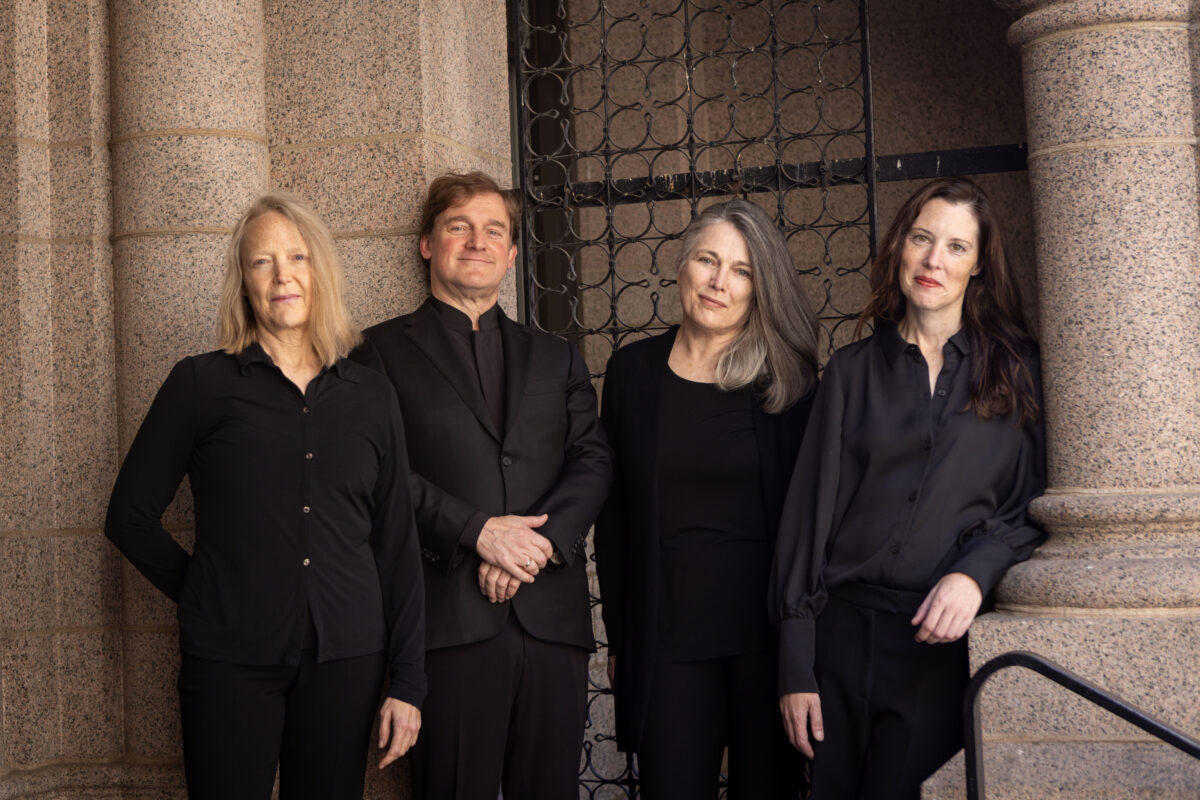
Concert 5 – Happy 40th Anniversary, Take Two!
Friday, February 6, 2026 @ 7:30 PM
Viterbo University Nola Starling Recital Hall
FREE AND OPEN TO THE PUBLIC!
Artaria String Quartet and Mary Ellen Haupert, piano
CROSSING PATHS WITH THE SCHUMANN’S
The Schumann’s occupied a central position in the musical life of early Romanticism, surrounded by composers whose ideas, friendships, and artistic ideals profoundly shaped one another’s work. Rather than a single stylistic school, this circle formed a living conversation—about poetry, form, emotion, and the expressive potential of instrumental music. These two programs trace those intersections, revealing how deeply personal experiences and artistic exchange informed some of the nineteenth century’s most enduring chamber works.
Across these two programs, Crossing Paths with the Schumann’s reveals a musical world defined by dialogue—between composers, genres, and personal experience. Together, these works illuminate how friendship, influence, and shared artistic values shaped the Romantic chamber music tradition at its most profound and human.
PROGRAM II
Fanny Hensel-Mendelssohn (1805-1847)
String Quartet in E-flat major (1834)
Adagio ma non troppo
Allegretto
Romanze
Allegro molto vivace
NOTES: Fanny Hensel’s String Quartet stands as a powerful testament to her compositional voice. Written in 1834, it reveals a composer fluent in Classical forms yet unafraid of Romantic expressiveness. Although social conventions limited her opportunities for public recognition, Hensel’s music was admired by those within her artistic circle—including Robert and Clara Schumann.
The quartet’s expansive opening Adagio unfolds with lyrical assurance, while the Romanze offers intimate, song-like writing that reflects Hensel’s deep sensitivity to melodic expression. The finale’s energetic drive and confident structure underscore her mastery of large-scale form. This work not only expands the canon but also deepens our understanding of the musical environment that shaped the Schumann’s and Mendelssohn alike.
Felix Mendelssohn (1809-1847)
String Quartet in F minor, Op.80 (1847)
Allegro vivace assai
Allegro assai
Adagio
Finale. Allegro molto
NOTES: Mendelssohn’s final string quartet is among his most emotionally unguarded works. Composed in the wake of Fanny Hensel’s sudden death, Op.80 is charged with grief, agitation, and raw intensity. Gone is the polished elegance often associated with Mendelssohn’s style; in its place stands music of restless urgency and stark emotional honesty.
The opening movement surges forward with barely contained tension, while the Adagio serves as a deeply personal lament. The quartet’s uncompromising character mirrors the emotional vulnerability found in the late works of Schumann, who admired Mendelssohn’s intellect and craftsmanship even as their temperaments differed.
Robert Schumann (1810-1856)
Piano Quintet in E-flat major, Op.44 (1842)
Allegro brillante
In Modo d’una Marcia. Un poco largamente
Scherzo. Molto vivace — Trio I — Trio II
Allegro ma non troppo
NOTES: Schumann’s Piano Quintet, composed in the same extraordinary year as his string quartets, stands as a cornerstone of the chamber music repertoire. In this work, Schumann effectively invented a new genre, integrating the piano as an equal partner rather than a soloist accompanied by strings.
The opening Allegro brillante radiates confidence and joy, while the march-like second movement introduces a solemn, processional character, later transformed through dramatic contrast. The Scherzo sparkles with rhythmic vitality and playful invention, and the finale brings the work to an exuberant close, culminating in a triumphant contrapuntal synthesis of themes.
Clara Schumann was the work’s first and greatest champion, and her virtuosity shaped its pianistic brilliance. The quintet embodies the ideals shared by the composers on this program: music as intimate conversation, emotional expression, and structural imagination intertwined.
ABOUT ARTARIA STRING QUARTET
“Minnesota’s foremost teaching and performing string quartet”, the Artaria String Quartet is an “exceptional ensemble with impressive confidence in its interpretations”. Winners of the prestigious 2004 McKnight Fellowship for Performing Musicians, Artaria was featured on Twin Cities Public Television as part of the Minnesota Originals series and was named 2013-14 Minnesota Public Radio Artists-in-Residence.
Artaria was formed in Boston and mentored by members of the venerable Kolisch and Juilliard Quartets. Their “refined and thoughtful playing” brought them to the attention of Alexander Schneider, violinist of the legendary Budapest Quartet, who invited them to make their New York debut on his own New School Concert Series. Since then, they have performed at major venues throughout the United States and Europe, on national television and public radio, and at top international music festivals.
In 1992, Artaria competed at the 4th Banff International String Quartet Competition in Banff, Canada. Earning numerous awards from the National Endowment for the Arts, Chamber Music America, and the Minnesota State Arts Board for excellence in performance and educational outreach, Artaria are founders of the highly regarded Artaria Chamber Music School in Saint Paul, MN, Stringwood Summer Chamber Music Festival, in Lanesboro, MN, and the Saint Paul String Quartet Competition, an international showcase for top-tier collegiate and pre-college string quartets hosted each April in Sundin Music Hall.
This season, they are celebrating their 40th year of chamber music performing and educating.